August 12, 2026
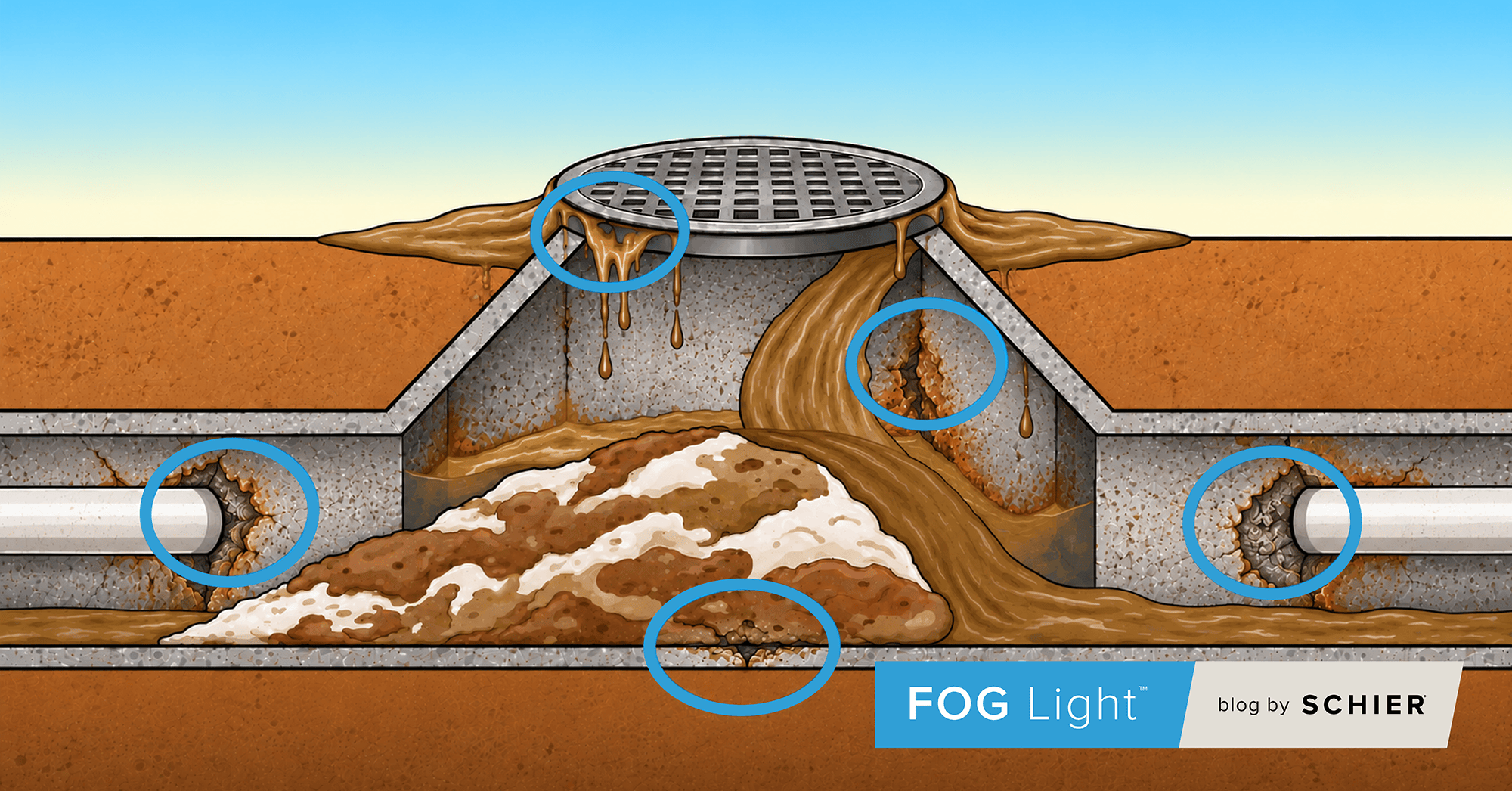
Many jurisdictions are going on offense against concrete grease interceptors. Sanitary Sewer Overflows (SSOs), Hot Spots (frequency of problems in specific areas), aging infrastructure, and closed businesses due to hidden costs, are all indicators of a failing concrete interceptor. These issues are encouraging officials to take action with simple legislative solutions. And you can (and should) too!
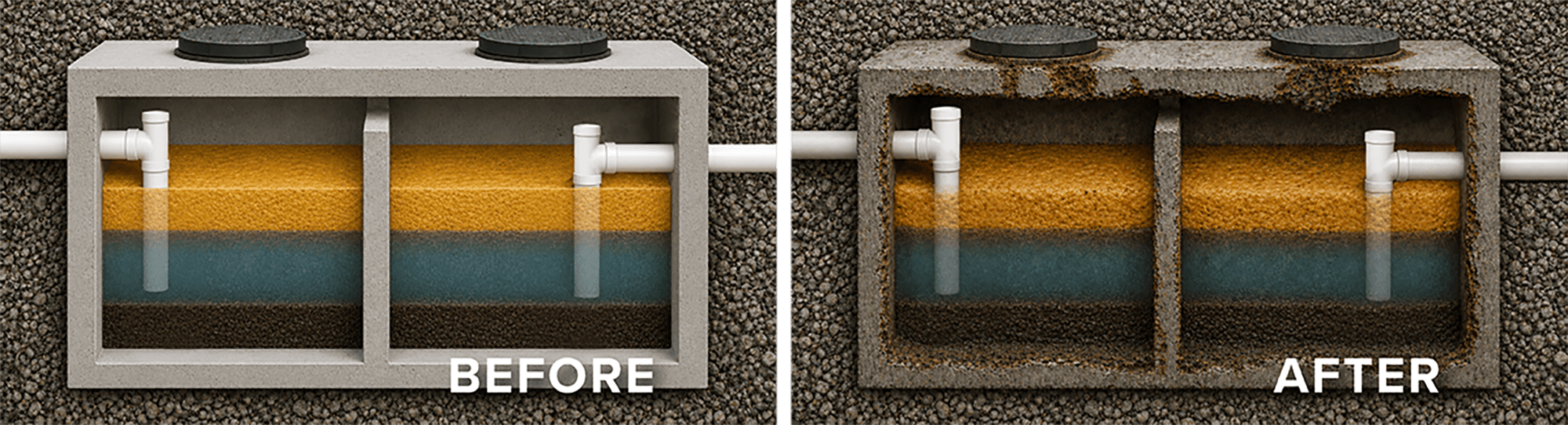
Here are a few jurisdictions leading by example:
 Authorities in Springfield regularly inspect interceptors, usually when they are full (a big hurdle in identifying failed concrete), and have found an average pH of 3 (as acidic as a lemon). As noted in our What is the chemistry telling us? blog, any pH of less than 6.5 will cause the concrete to corrode.
Springfield began seeing grease-related sewer issues in a neighborhood downstream of a fast food fried chicken restaurant. The inspector requested to see the interceptor empty and was able to identify deterioration. This unit was inspected every one to two years by previous inspectors and pumped monthly, but this was the first time that it was observed empty. Note, in the photo below, the baffle in the bottom right hand corner is completely corroded away and missing. The tank walls are also showing signs of deterioration.
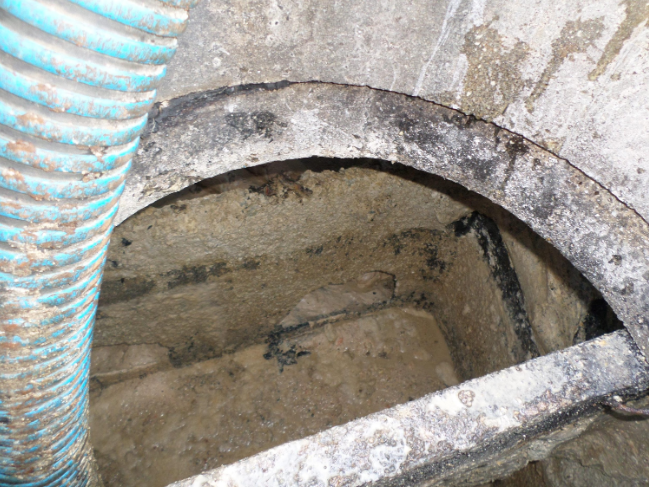 Photo courtesy of the city of Springfield, MO
A university dining hall, serving nearly 3,000 meals a day, was causing major grease-related issues downstream. Because the university was their own authority, Springfield had to engage with them to gain access to show that there was an issue. Upon inspection, damage to their interceptor was discovered and the unit was then replaced.
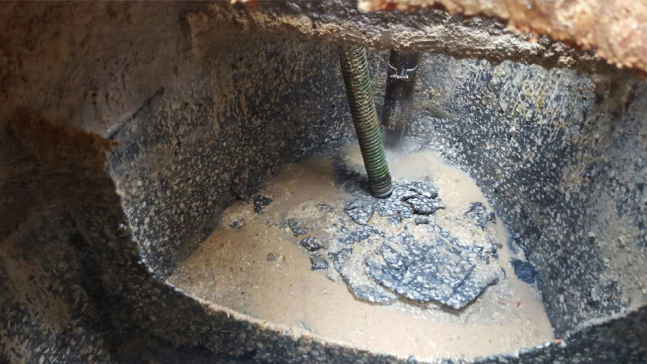 Photo courtesy of the city of Springfield, MO
Springfield identified grease-related issues from a Mexican restaurant because the grease was orange from enchilada sauce, even though the interceptor was inspected yearly and pumped every two weeks. As an aside, the issue was observed even after they replaced their unit, so a dye test was performed which found many critical grease bearing fixtures were bypassing the grease interceptor. They had to re-plumb the entire kitchen to discharge to the new grease interceptor. Thorough investigation should always be conducted to make sure the system functions correctly as a whole.
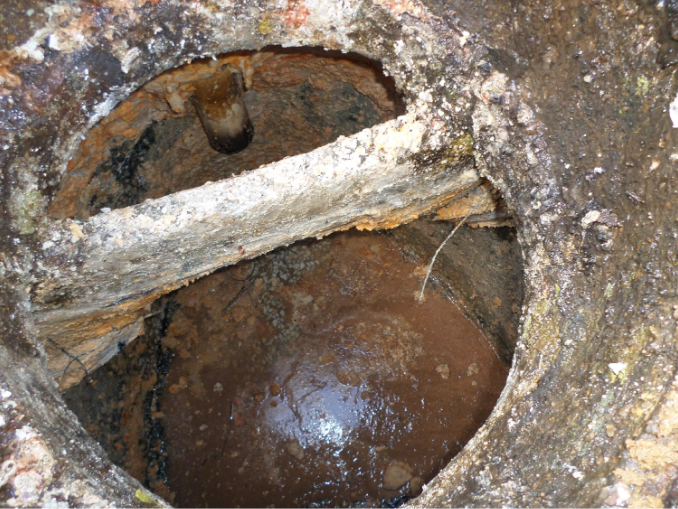
Recurring events like these led to Springfield outlawing concrete and requiring the national grease interceptor standard, ANSI Z1001, for any gravity grease interceptor installed.
"The main course of action we have taken since the beginning of our program is not allowing new concrete interceptors to be installed within city limits. We do the plan reviews and will deny any precast interceptors we see as per our adoptive city ordinance." - Jesse Vandiver, Springfield, MO
 HRSD is the fifth largest sanitation district in the U.S., serving nearly 2 million residents in southeast Virginia. It features nine major plants plus several smaller facilities and treats around 225 to 249 million gallons of wastewater per day.
HRSD’s code states that gravity grease interceptors, if approved for installation, must be certified to ANSI Z1001 and made from materials that are compatible with a pH of 3. Hampton Roads also requires the existing concrete interceptors to be pumped every 30 days due to lack of performance as a whole.
 Officials in Bentonville saw issues when inspecting empty interceptors, prompting them to amend their code with specific language: (Grease interceptors must be) Constructed of non-corrosive material; such as HDPE (high density polyethylene) & Thermo-plastic. Concrete and Metal Fabricated interceptors will not be allowed.
Few ordinances key on the material itself, but Bentonville wanted to be very clear that steel and concrete were no longer allowed.
There are now dozens of jurisdictions that have outlawed concrete grease interceptors in their programs. Here are a few more examples of local code:
Columbus, OH
The designed service interval shall not exceed 30 days between services for concrete gravity units or 90 days between services for units constructed of materials resistant to degradation associated to the pH levels in the effluent or the hydrogen sulfide gas byproducts.
Flagstaff, AZ
GGIs are recommended to be made from materials that are compatible with a pH of 3 to preserve the integrity and longevity of the interceptor. GGIs made from materials that are subject to corrosion such as concrete or steel, should be lined or coated with a durable material approved by the City that is compatible with a pH of 3 and that cannot be easily penetrated, scraped away or removed.
Miami/DERM
The material of the interceptor shall also be compatible with a pH of 3.0.
Peoria, AZ
All pretreatment devices must be constructed of non-corroding materials. Concrete or metal devices are prohibited for installation in food and/or beverage service, preparation, or handling establishments, or in any application where the surroundings and/or contents will cause any degradation of the interceptor or associated plumbing.
York Sewer District, ME
All Grease Interceptors shall be made from materials that are compatible with a pH of 3. Grease Interceptors that are made from materials that are subject to corrosion such as concrete or steel, shall be lined or coated with a durable material approved by the District that is compatible with a pH of 3 and that cannot be easily penetrated, scraped off or removed. Acid Resistant Enamel coatings (A.R.E) are not allowed.
Most of these jurisdictions are on the same page about the following:
Material selection is crucial for interceptor longevity.
Concrete interceptors are prone to internal corrosion and failure.
Non-corrosive, pH 3-compatible materials provide a lasting solution.
Consistent regulatory language supports long-term sustainability.
Keying in on these four pillars of successful FOG management can help save your city from the headaches of failed-concrete-related grease issues and can help keep hardworking restaurant owners in business.
“After 10 years without updates to the City’s FOG ordinance or regulations, Palo Alto adopted a new FOG ordinance that prohibits grease control devices from being made of materials susceptible to corrosion in low-pH environments.” - Gabrielle Stauffer, Palo Alto, CA
Written by: